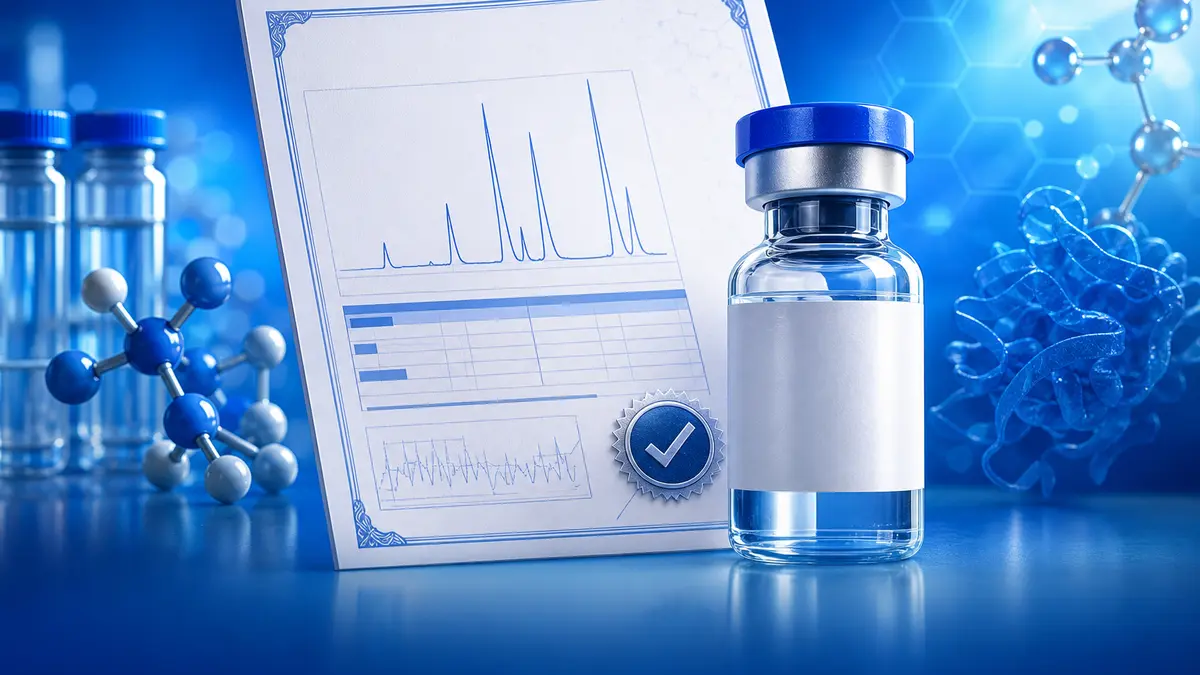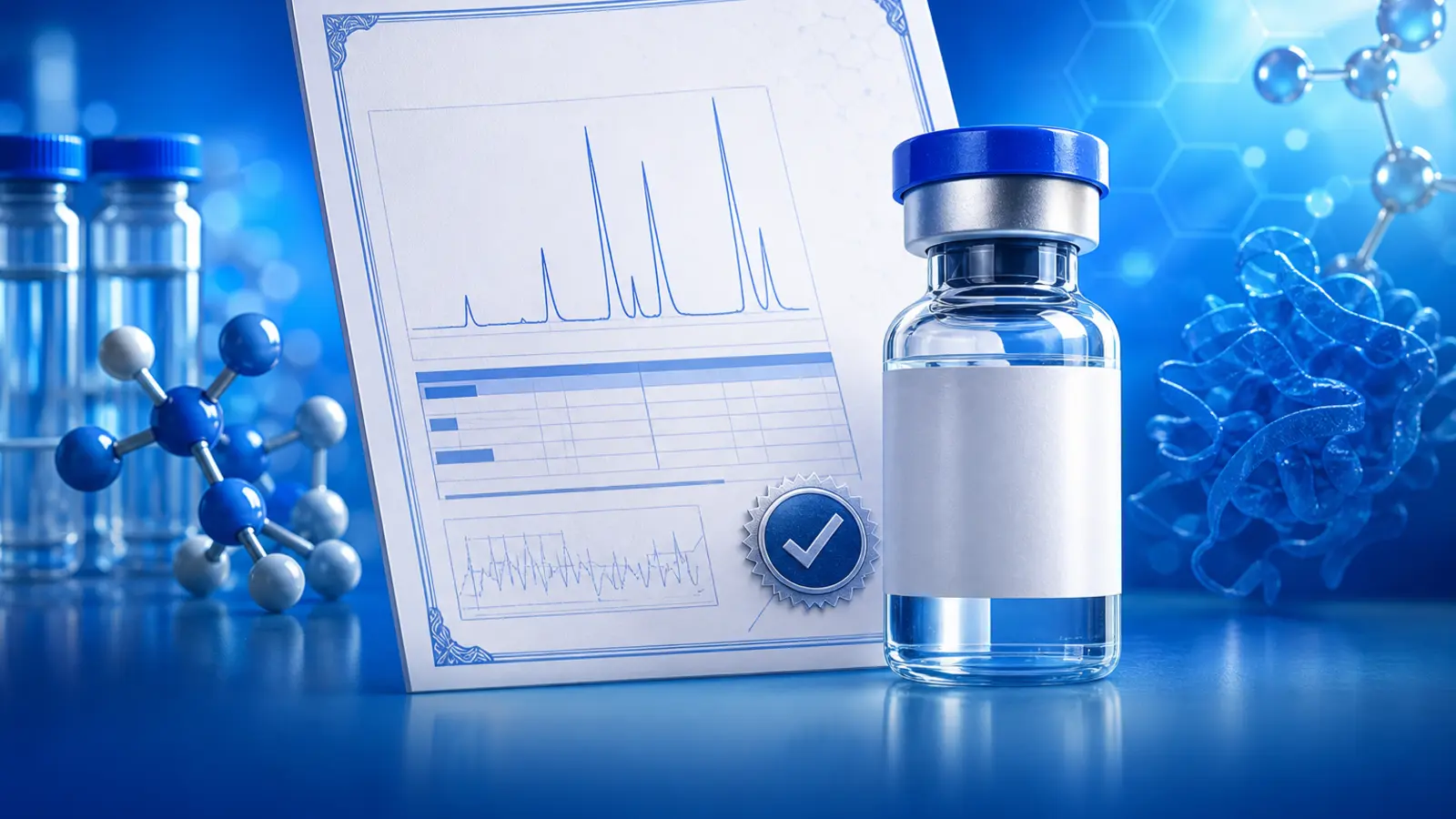
If you have ever ordered a research peptide and seen a document called a COA (Certificate of Analysis), you might have wondered what it actually means. The good news: you do not need a science background to understand it. This guide explains a COA in everyday language.
Think of a COA as a report card for a specific batch of product, a little like the nutrition label on food. It is created by a lab and tells you what was tested and what the results were.
What a COA Is (in Plain English)
A Certificate of Analysis is a one-page lab report tied to a particular batch. Every batch gets its own report, with its own batch number. That batch number is important. It should match the number printed on your vial, the way a receipt should match what is in your bag.
A COA exists to answer two simple questions about that batch:
- Is it the right thing? (Did you get the peptide the label says?)
- How clean is it? (How much of it is the actual peptide versus leftover bits?)
The Two Numbers That Matter Most
1. Purity. This is usually shown as a percentage, like 98% or 99%. In simple terms, it tells you how much of the material is the peptide you wanted versus small leftovers from making it. For research-grade peptides, 98% or higher is the common standard. We break this down further in what peptide purity actually means.
2. Identity. A separate test confirms the peptide is truly the molecule on the label, not a look-alike. It works a bit like a fingerprint check. We explain it plainly in how labs confirm a peptide is the real thing.
What to Check on a COA (Quick List)
- The batch number matches your vial
- A purity percentage is shown (ideally with the test method)
- An identity result confirms it is the right peptide
- A recent date on the report
Want to go step by step? See our beginner walkthrough on how to read a peptide COA.
How CoreVials Handles Documentation
CoreVials keeps supplier-provided batch documentation when it is available for eligible products. Verified research customers can request what is available through our team rather than searching for files online. Start at Batch Documentation Access or reach us on the contact page.
Common Questions
What is a "good" purity number? For research-grade peptides, 98% or higher is typical, and some labs aim for 99%.
Does a COA mean a product is safe to use? No. A COA is only about identity and purity for laboratory research. These products are for research use only and are not for human or animal consumption.
Do I need to be a scientist to read one? Not at all. If you can match a batch number and read a percentage, you can get the key information.
Sources
- U.S. Food & Drug Administration / ICH Q6A: how specifications and acceptance criteria work
- U.S. Pharmacopeia: standards for peptide quality testing
Research Use Only. Not for human or animal consumption. This article explains lab paperwork for laboratory research and is not medical, dosing, or usage advice.